Francesco Meda
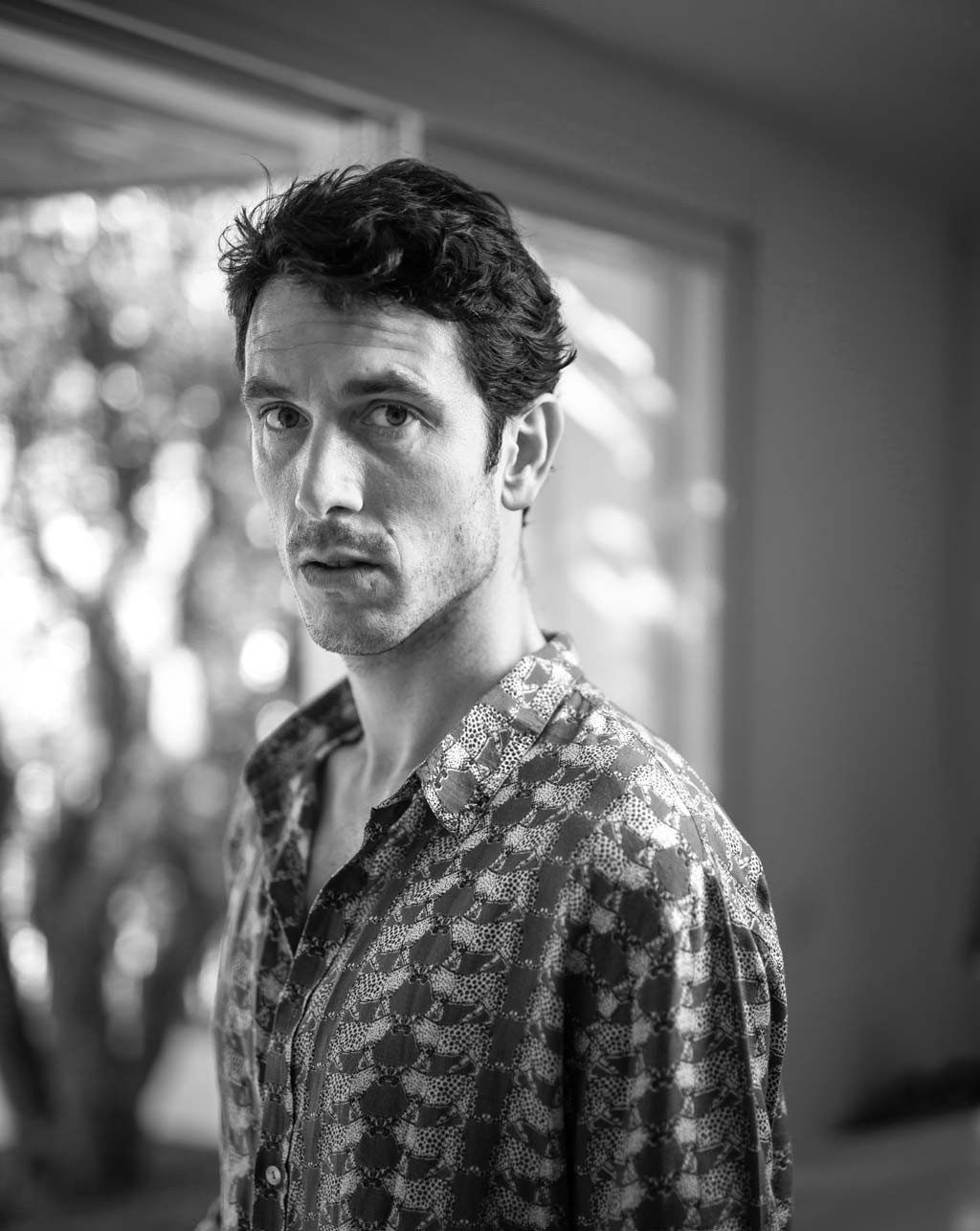
Francesco Meda (Milano, 1984) is an Italian designer with a background in Industrial Design from the IED – Istituto Europeo di Design. After gaining international experience, he returned to Milan and began a personal journey that combines technological experimentation, material sensitivity, and a focus on function. His design approach is essential and fluid, skillfully blending innovation with memory. He moves naturally between serial production and independent projects, working across product design, art direction, and research on manufacturing processes. He lives and works in Milano.
Q: What does it mean to enter a living room with the Palma sofa? What sensations should it convey?
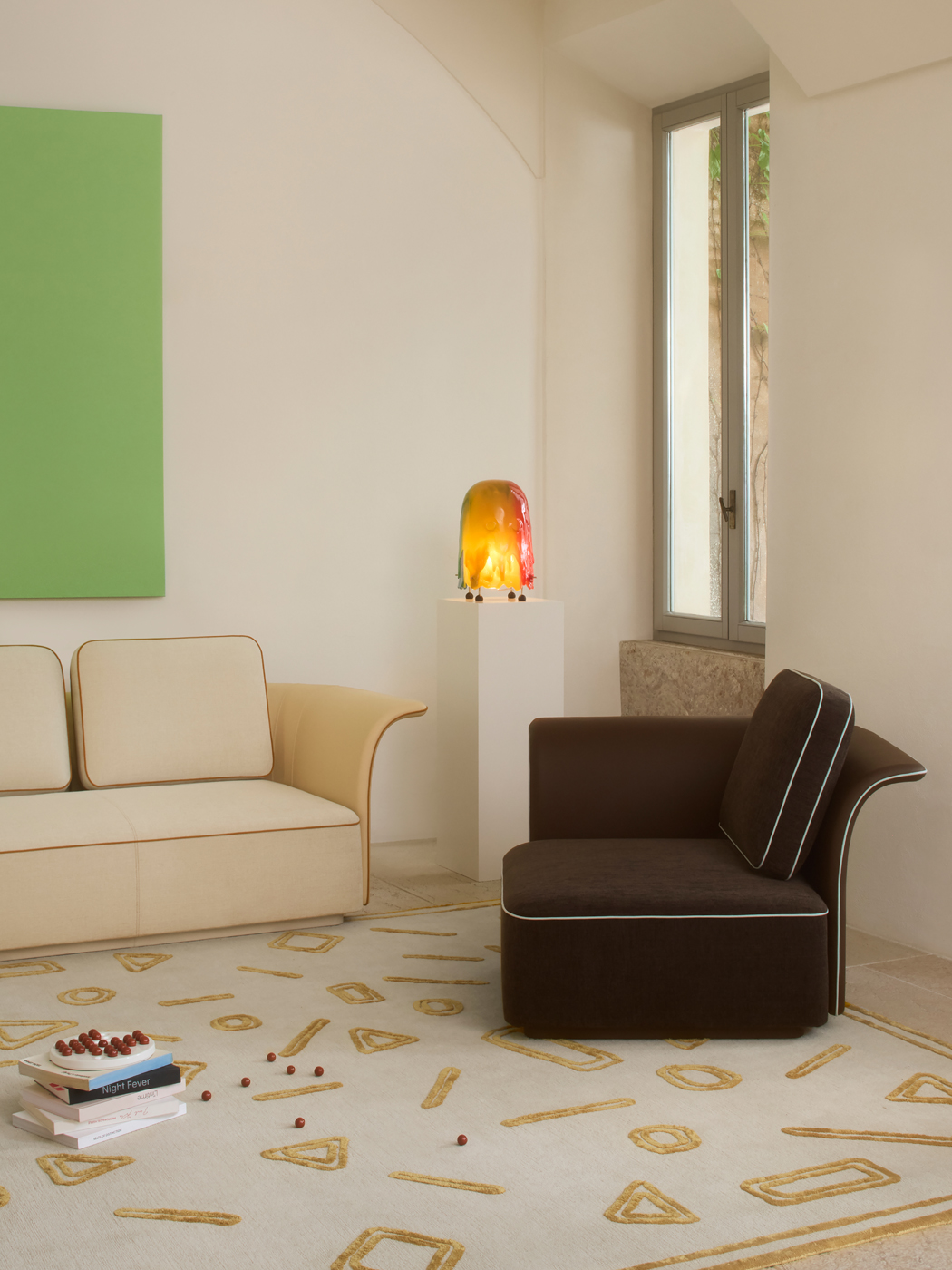
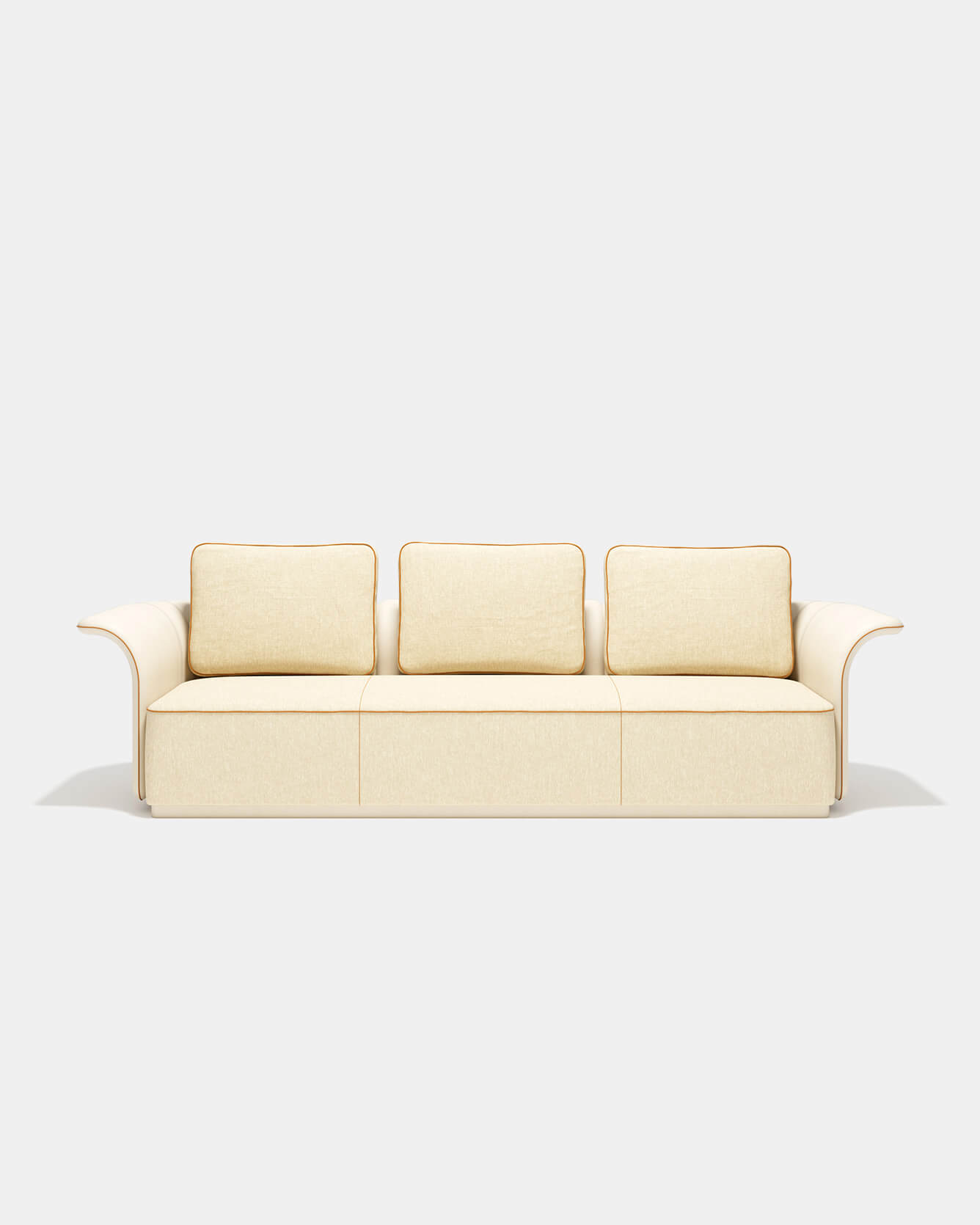
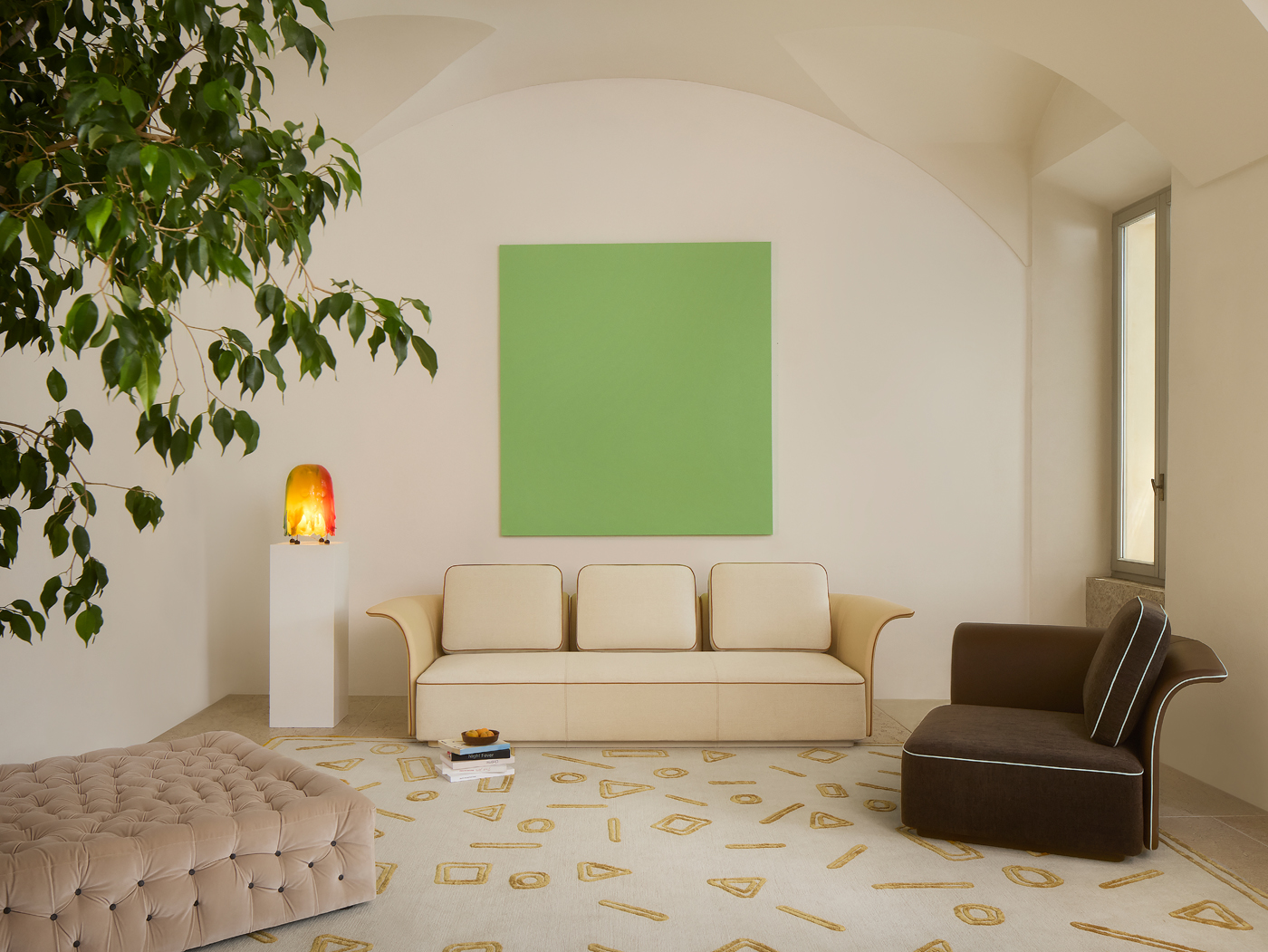
A: The sensation the Palma sofa should convey is that it's an unconventional sofa. In a space, it has this ability to be enveloping, sculptural, and give you a feeling of tranquility and welcome. So, let's say its characteristic is that it also tries to be a little more emotional than the classic conventional sofa. And so with the whole theme, let's say metaphorically, of welcome, of protection, you have this sort of petal, a shell that envelops you.
Its organic silhouette, in fact, has a closeness to the world of nature, and therefore these aspects of welcome, peace, tranquility, and contemplation [invite] in a certain sense to linger a little longer. And so [the point] is this: trying to make an object that is both functional and emotional.
We're in the heart of Brera, in a beautiful gallery hosting the Meritalia® exhibition, and in this case, we're on my Palma sofa, the first project for the brand we presented at this year's Salone del Mobile.
Q: The name Palma was inspired by your daughter. Is it true that design can help us see the familiar in an extraordinary way?
A: Yes, the Palma sofa is inspired by my daughter's name, but we're also talking about the actual palm tree, in the literal sense of nature, the plant. The sofa reminded me a lot of this closeness to the natural aspect, so it seems like a sort of petal, a silhouette, an organic form. It's something that reminds us of a sense of serenity, of security, and [consequently] it's something linked to family. With Charley [Vezza] we talked about trying to make the sofa of your dreams when you're at home. Beyond other solutions that are always valid, I liked this idea of having a product that was more of a sign within the environment, both graphic but also, as I said before, emotional. This doesn't mean that the entire house has to have Palma sofas, but that sofa, a module, an armchair is something that takes you back to something warm, emotional, welcoming, soft. And so we worked on this. There's [also] a bourgeois aspect, which however isn't a bourgeoisie to be understood as conventional, predictable, but a sort of bourgeoisie as synonymous with lifestyle, balance and, in a certain sense, taste. So it's also interesting to understand that there's, within this project, a sort of dualism between the warmth of the sofa and this aspect. [In addition to this] visual, conceptual, and visual strength that is part of the DNA of Meritalia®, of a strongly radical design. So the difficulty was to be able to make something that [came from] a more classical world, therefore, as we were saying, also more bourgeois, to the point of giving it that twist that is the main character of the brand. So, it's very difficult, because then that twist can also result in something kitsch, exaggerated, and instead the strength of the brand has always been in interacting with great designers such as, indeed, Gaetano Pesce who made the history of Meritalia®. He has always been able to make products that are also very cultured but ironic, without, in fact, becoming something too arrogant within the space. And so, the example is La Michetta [by Gaetano Pesce], that is, this sofa that is inspired by a Chester, by an Italian spirit. Then, ultimately, he moved all the stitching points of the Chester in a completely casual and more informal way. And so, here too, with this project, the challenge was precisely to try to make something that met all the usual criteria, the ones everyone wants: beautiful, comfortable, different, with character. However, under the umbrella of a brand like Meritalia®, the bar was very high, and managing to create something that met all these criteria was a huge challenge. I think that together we achieved a result.
Q: What does it mean for a seat to be on a human scale?
A: The most important aspect is to put the human experience at the center. So, as mentioned before, there is an aspect of functionality, but also of relationship and emotion within a project. In this case, this project wanted to highlight this attitude.
This attention to proportions, to the fact that the materials had to communicate a graphic sign, this piping that defines and accentuates the shape... And on the other hand, there's the fact that it was an object that wasn't too static, but soft. So, working with Meritalia® on this aspect of emotion, I can say that it's perhaps the brand where I found myself having to confront myself the most, because in other fields you're more tied to a focus that's much more, precisely, simply linked to function; here, however, there are many ingredients, as I said before, that need to be calibrated: the color, the graphic aspect, the emotional aspect, the way it interacts within the environment, because Meritalia® doesn't work on collections, but always has a very strong and distinctive identity linked to each designer, to each product. Each designer has their own identity; therefore, their strength lies precisely in this cultural mix, which I believe is also the strength of humanity in general. Being able to enter and be involved in this adventure was certainly a great opportunity.
And then, if I may add, the [Meritalia®] environment is very human. I was struck by this aspect of revisiting these points that even we designers sometimes forget. [The designer's] work is almost more anthropological-social (I'm exaggerating with the words now); because ultimately, the risk is that of becoming flat if there isn't that drive to raise the bar or at least consider all these aspects that are the values of this company. So, you have to enter on tiptoe and respect the strength [of the brand]. You have to try to create a project that further enhances these values. I believe, as I said before, that this project is a contemporary response to the brand's values.
The challenge was precisely to combine the comfort and warmth of a home sofa with the visual and conceptual strength, so to speak, of a radical designer. So, it's not just about making a decorative object, but a product that can exist within a space in a way that isn't overbearing, but still evokes emotion in those who experience the space and the sofa. So, managing to balance these things was the main challenge. We live in a world of relationships; it's already difficult to maintain them with friends and family and so on... So, when you find pleasant working synergies, it's then pleasant to maintain them, grow together, and move forward. [In this case], obviously, we're not just making a collection of sofas, but we can share a path, you know. I really believe in this kind of working approach.
Q: What technical specifications would you like to share about Palma?
A: As for technical details, [Palma] is a sofa that, despite its simplicity, still presents considerable difficulties in its production, but which, if resolved—as we managed to do successfully—also express Italian know-how, the concept of quality. The shell is all curve-against-curve, so it's not easy to get the leather to adhere. This piping, then, defines the shape in a very graphic way, and also gives this sense of comfort but also of lightness. So, there are many aspects that have been resolved and are part of the process, including finding the right supplier, the most suitable for the type of product. So, here we're talking about upholstery, but we're also talking about a structure, as I said before, a sort of petal that welcomes you. So, we tried to keep these thicknesses not excessively thick; however, on the other hand, [the sofa is comfortable to the point that] you don't feel rigid, hard. [We also played with] this piping that is usually used in the world of cushions, but there was a kind of twist whereby it is used to give a signature to this shell. So, I refer back to Meritalia®, for which the bar is raised a bit in terms of trying to break the mold in a sober and elegant way. This is why I was talking about the bourgeoisie: not the word bourgeoisie as a derogatory term or just as a cliché.
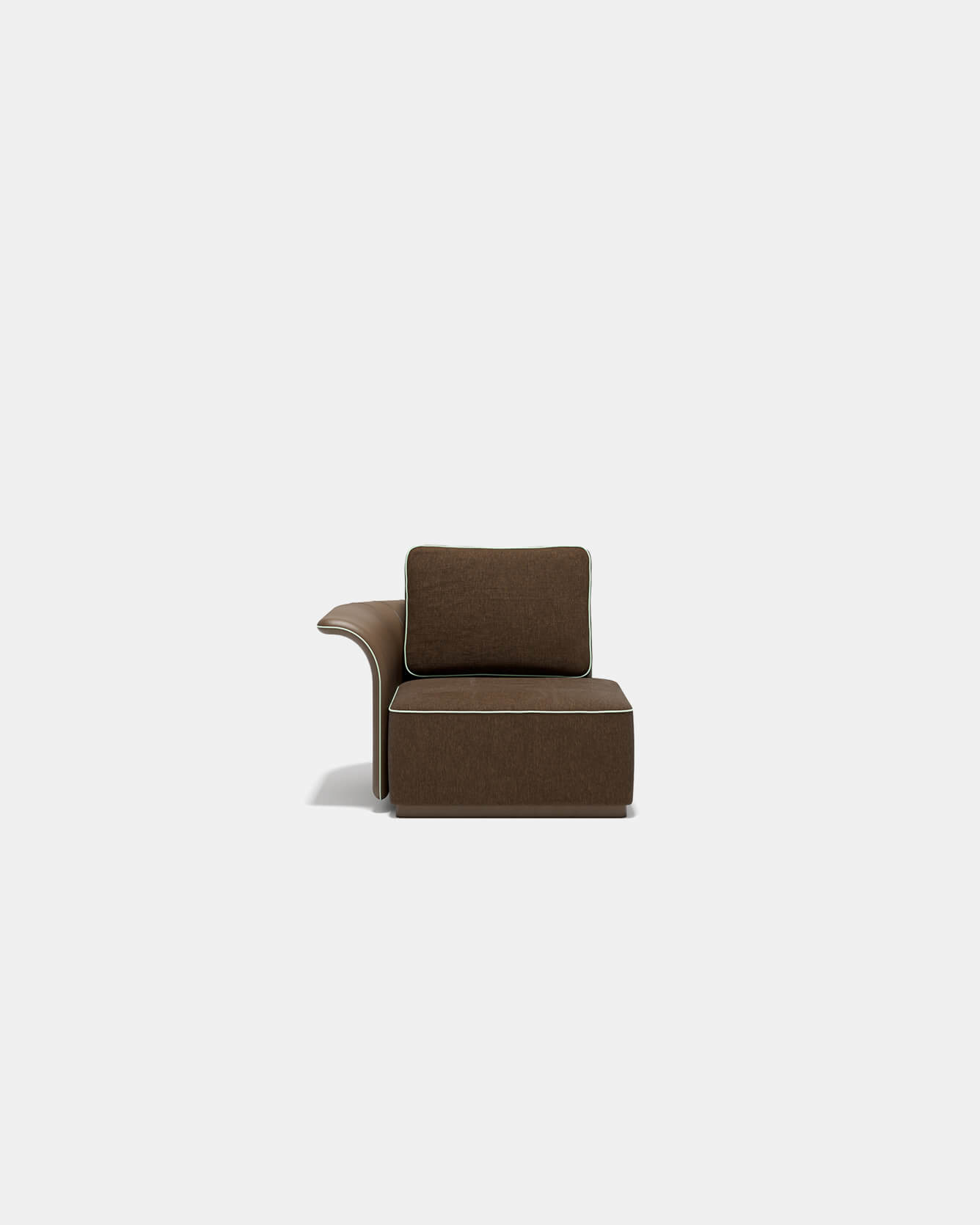
Even the concept of the armchair [Palma] that was born: it's an armchair that from a certain perspective, it's half classic, but then half a little "crazier," because this "petal" is only on one side. For this reason, there's the idea that you can sit in a more informal way. So, probably, when you put the two armchairs, each with a petal on one side, together, it's as if you're closing a set with the two "sisters" next to each other. Here too, there was an opportunity, working with the Meritalia® team, to question the rules, as a designer who hadn't worked with this brand before. Other companies would tell you, "You're crazy not to put the armrest on both the right and left." But, in the end, it also makes sense functionally, because there are objects, indeed, that make the classic armchair a classic armchair. But in this case, we find both a functional and a layout use within a different space. So: this [seat] is better suited to a corner, or in a more informal setting where you position yourself more diagonally or obliquely. So, even trying to understand the habits and customs—which are obviously not all the same—allows you to think about the project in a non-standard way, but one that pushes you to try new things. This doesn't mean "let's do it strangely," but [it means] thinking about dynamics that are constantly evolving. So, it was an excellent start, as an experience.
Q: In the project, how do you compare to your father's [Alberto Meda] work? What are the points you have in common and what are the points of difference?
A: With my father, who has been doing this job for many years, I interact in a very healthy and human way. I'm fortunate to have a father and a mentor who is very solid personally and fulfilled. That's why he always respected me and let me do what I wanted, without imposing his own language or vision. I believe this was the key to success for both of us in terms of our relationship. And then, this aspect of working one-on-one, very close, almost like a workshop, for so many years, meant that knowledge was passed on, very intimate connections were formed, because I had the opportunity to spend a lot of time with him and see how he worked, without having a studio with 40 or 50 people. This was like an accelerated master's degree. I was fortunate compared to others, because I had the opportunity to truly see 360 degrees how a project is born, how relationships with the entrepreneur and with external collaborators are. However, he, with an engineering background, has a very different mindset, much more tied to the construction aspect of things, which is perhaps the aspect in which I was most lacking at the time. My way of working is more tied to image, to references, to influences that can come from art, architecture, or completely other worlds. So, in a certain sense, my dad values my work experience, because it's as if he had—even though we're different in age and generation—the ability to see the world through fresher eyes, even biologically. I like talking about it because I don't feel it weighs on me in the slightest, precisely because we each have our own identity, our own clients, our own work. Every now and then they ask us to do things together, or every now and then we decide to do things together. Every now and then he asks me for advice, and I ask him for a lot of advice. So, it's a very natural relationship. Of course, it's not that there aren't frictions or arguments, as in all human relationships... But I see it as something very important, precious, and also a huge blessing compared to other people who haven't had such an intimate figure close to them, who guides them in their career, but without ever being too burdensome. So, it's something very healthy that I experience very calmly and peacefully.